Trigger
Service health degrades and autonomous responders open a controlled remediation intent.
Use Cases
This use case maps Change management workflows to governed ASDLC execution. The main design pressure is approval evidence while preserving autonomous throughput.
Operational Scenario for teams implementing governed autonomous delivery in production environments.
Reference Visual
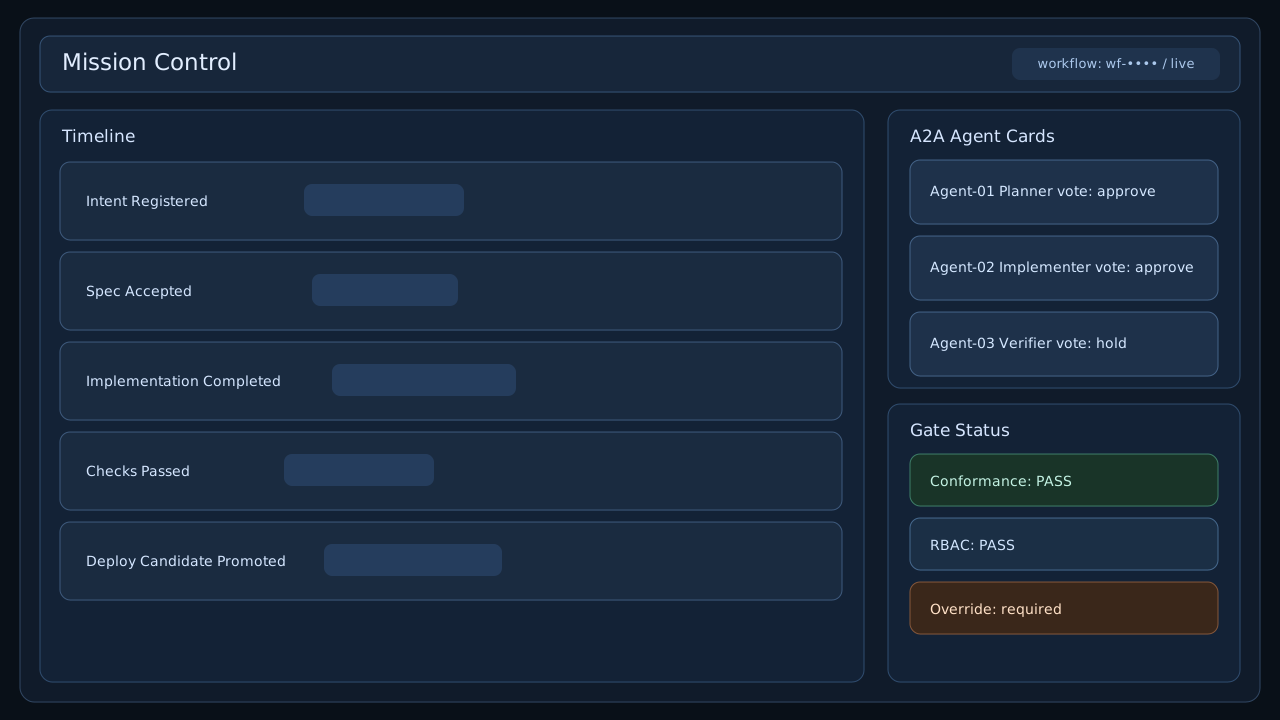
Reference visual aligned to Stage, Gate, and Decision semantics.
Scenario
Service health degrades and autonomous responders open a controlled remediation intent.
On-call engineer, remediation agent, policy approver, and release operator collaborate in-path.
Fixes promote only after checks and approvals produce auditable evidence.
Workflow
Gates Used
| Gate | Condition |
|---|---|
| Production deploy | Human approval plus successful checks |
| Override request | Role-based approval with trace annotation |
| Ship transition | Conformance evidence attached |
Measured Outcomes
Faster diagnosis from unified timeline and deterministic transition records.
Governed rollback semantics reduce decision latency during high-risk incidents.
Replayable evidence removes reconstruction effort during compliance review.
Execution Proof
00:00 detect.alert.opened
00:14 remediation.intent.created
00:42 checks.passed
01:03 approval.human.granted
01:12 deploy.executed
01:26 evidence.ship.recorded
Next Step
Evaluate this pattern in your environment with enforceable gates and replayable evidence.